
Care Quality Evaluation (CQE)
London School of Economics and Political Science


Problem
The development of Integrated Care Systems (ICS) is significant not only for England and the UK but also on a global scale, as highlighted by the WHO’s global strategy on people-centred and integrated health services. The core principles of this strategy aim to strengthen and build upon the WHO’s ongoing commitment to universal health coverage and primary healthcare.
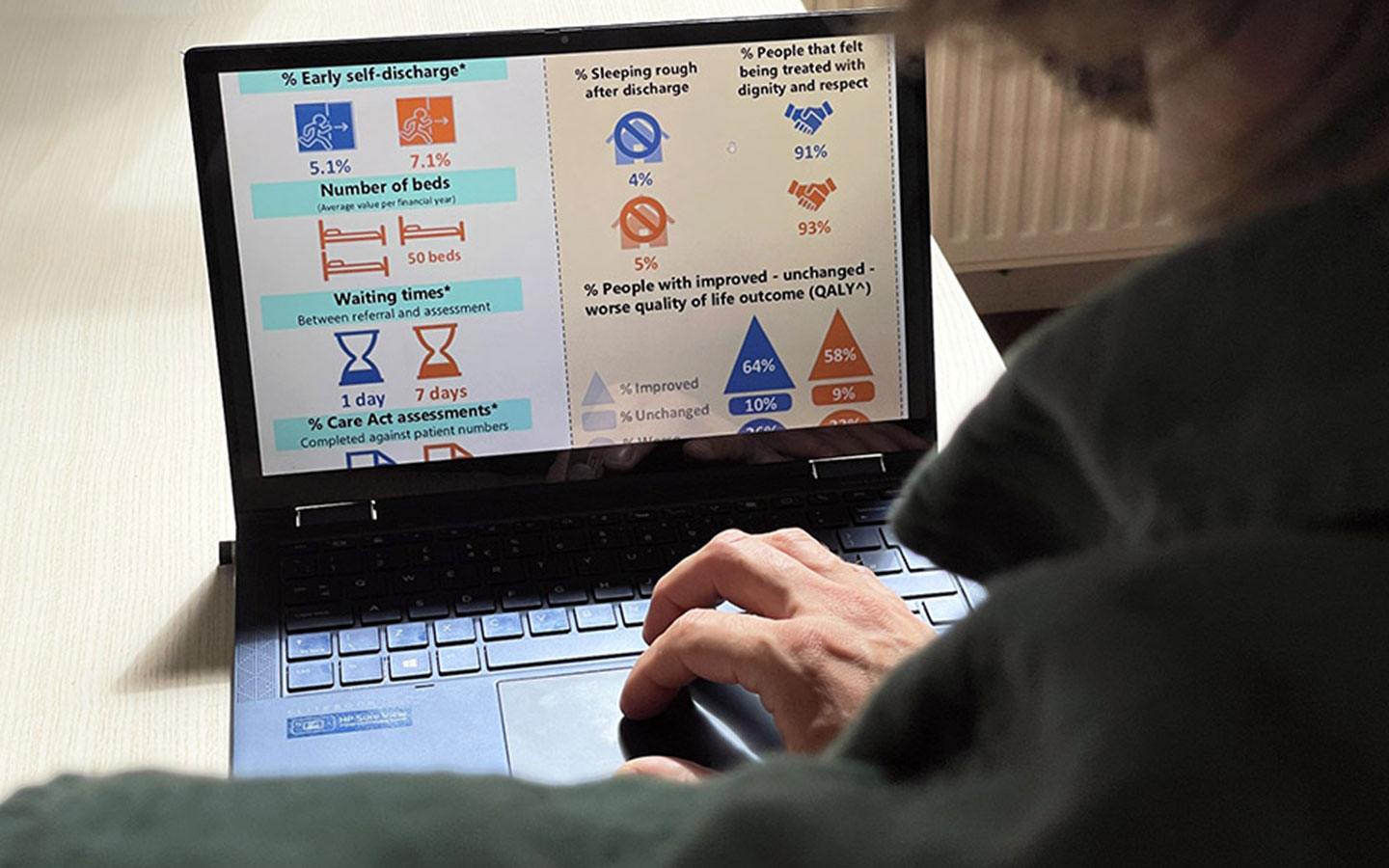
Currently, there is no comprehensive system that evaluates both the data generated from patient-centred interventions and the context in which these interventions occur. This lack of integration prevents stakeholders – responsible for commissioning, managing, and delivering health and social care services – from accessing the insights needed to enhance care quality and improve societal productivity on a population level.
Solution
Care Quality Evalution (CQE) is a modular digital platform technology designed to improve outcomes for people with data-based decision making. The idea is to support an Integrated Care Ecosystem using pre-built compliant capability and re-usable tools, to deliver a service that can develop new insight at population level through the collection, monitoring and evaluation of data created from patient level interventions, and the context in which those interventions were delivered. The underpinning business intelligence capability is intended to be easy to use and likely delivered through a Software as a Service model, to reduce the time and cost of developing new services and provide health and care professionals, and patients, with a consistent user experience, irrespective of circumstance.
Connecting individual patient outcomes to the economic productivity and social impact of care management on the population will realise a multiplication effect at population level, from delivering small incremental differences for individual patients.
Sustainable Development Goals addressed

Design Otherwise
The University of Glasgow
Problem What works, and what doesn’t, for improving inclusion and diversity in the cultural economy? What happens when creative business meets equity and social justice? How can we bring in brilliant talent that faces structural barriers? And how can policy and sector organisations drive change in a complex, dynamic sector? We need answers to these […]
C2LI (Climate Change Legal Initiative)
University of Strathclyde
Problem Climate change now permeates every aspect of life and so it also permeates every aspect of the law. Climate-related legal developments and litigation trends are evolving with ever-increasing speed and complexity. There is a need for access to experts who can help make sense of it all. Solution C2LI is a social enterprise committed […]
Bristol Digital Game Lab
The University of Bristol
Overview Video games are no longer just entertainment. They are tools for change. The Bristol Digital Game Lab, based at the Bristol Digital Futures Institute, is pioneering this shift. From public health to cultural heritage and policy, games are shaping how we learn, connect and solve complex challenges. The Game Lab asks not just what […]

Bridging Histories
The University of Bristol
Problem Conversations revolving contested heritage, local history, identity, justice and prejudices often involve hostile debates, deep polarisation, rigid ideological debates and social division. Solution Bridging Histories was developed to help dissolve the very rigid debates and frameworks that we can get locked into. Getting people to tell their stories and share personal memories can help […]