
Anti-Slavery Intelligence
Lancaster University
Who would you like to contact?
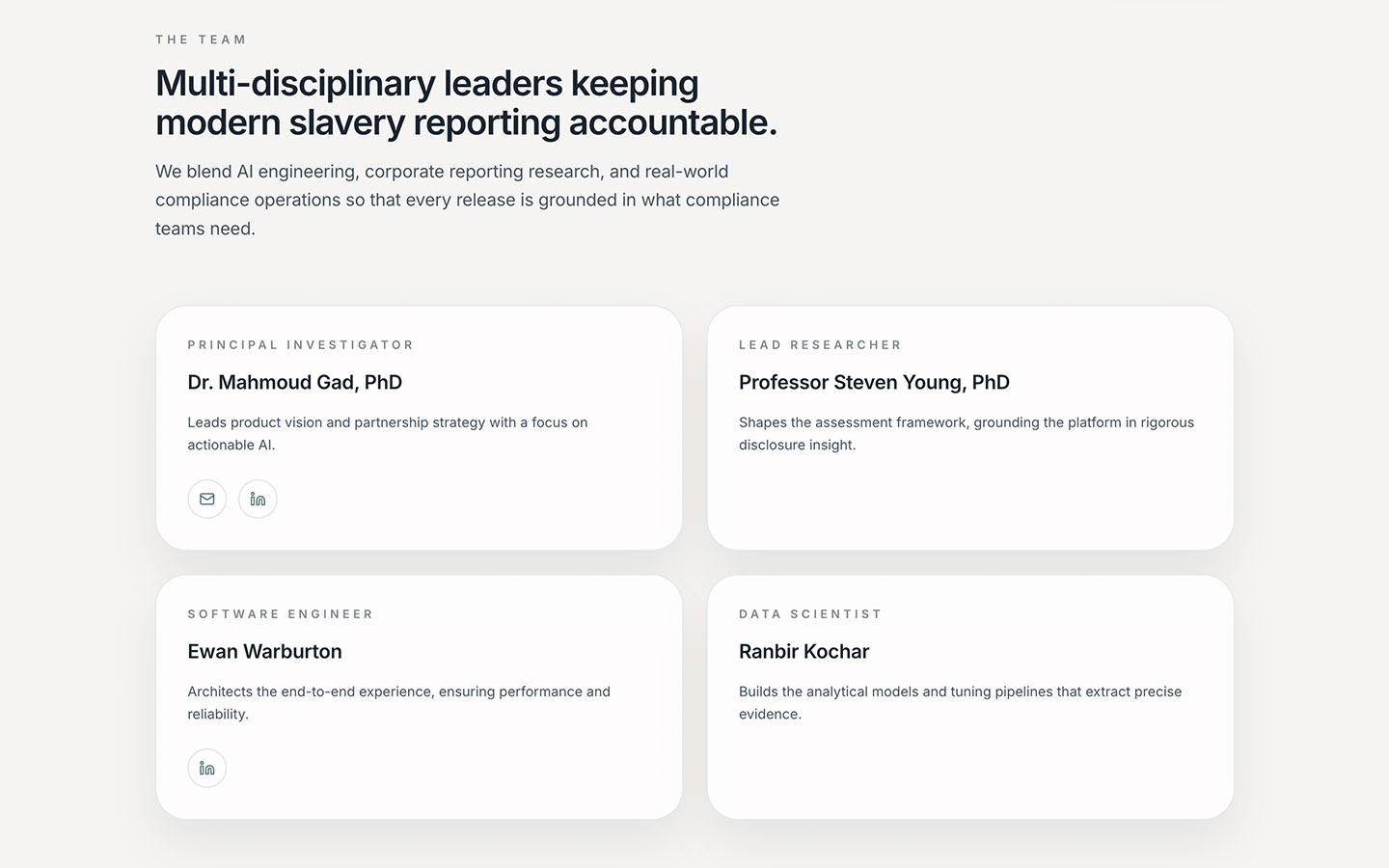
Mahmoud Gad
Academic
m.gad1@lancaster.ac.uk
Steven Young
Academic
s.young@lancaster.ac.uk
Problem
Modern slavery affects around 50 million people worldwide. In the UK, large companies (≥£36m turnover) must publish annual modern slavery statements, but the quality and consistency of these reports vary widely, making effective oversight difficult. Manual review at scale is slow, costly, and inconsistent, which limits the ability of investors, civil society, regulators and companies themselves to identify risks and drive improvement.
Solution
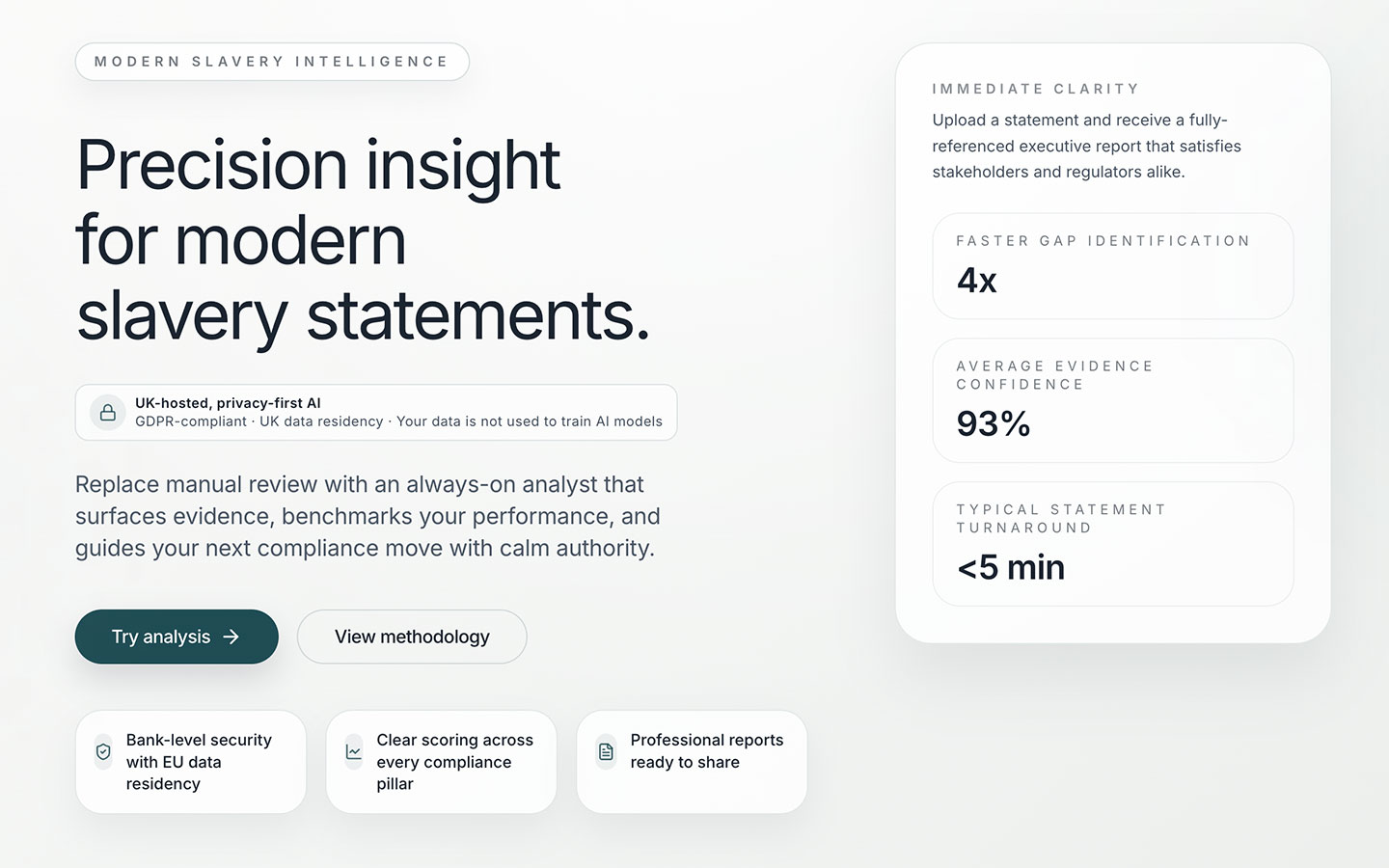
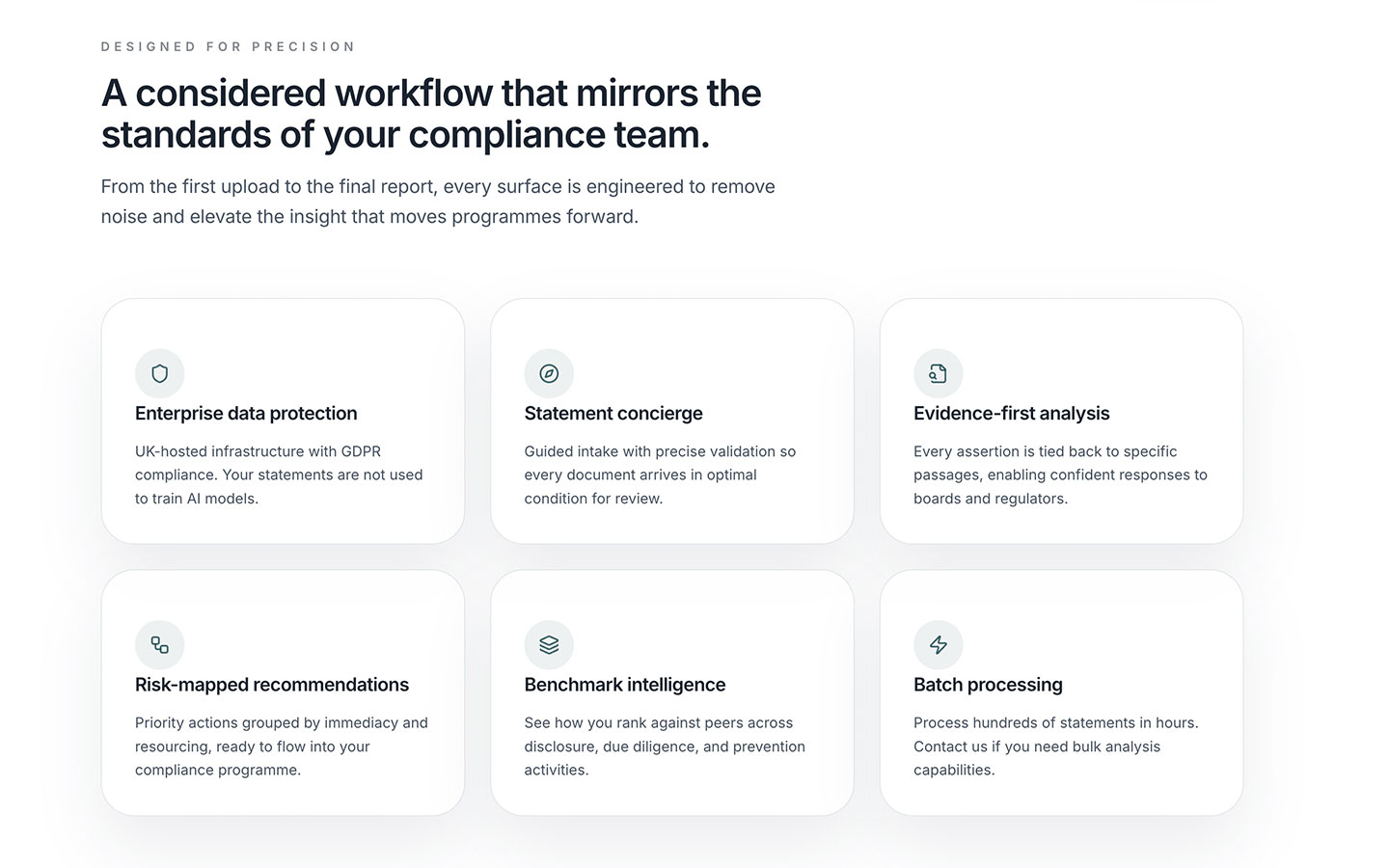
Anti-Slavery Intelligence is an AI-powered platform that automatically analyses corporate modern slavery statements, producing transparent compliance scores, benchmarking, and practical recommendations for improvement. The tool converts a manual, months-long process into minutes, enabling portfolio-scale analysis for investors, standardized evaluation for regulators and CSOs, and immediate feedback for companies seeking to strengthen their reporting and practices.
Sustainable Development Goals addressed

Some facts:
- In practice, high-quality statements should explain governance accountability, supply-chain risk assessment, due-diligence processes, training, effectiveness indicators, and responses when cases are found. Studies show that many disclosures remain incomplete, boilerplate, or disconnected from risk management practices [BHRRC, 2016; Nersessian and Pachamanova, 2022; Mai et al., 2023].
- Forced labour and trafficking risks arise in real supply chains, especially where outsourced, temporary, or migrant work obscures accountability and workers face coercive practices such as recruitment-fee debt or passport retention [ILO et al., 2022; CCLA, 2024]. These harms make statement quality consequential, because weak disclosures can hide whether firms are finding cases, remedying affected workers, and preventing recurrence [CCLA, 2024].
UKRN Services CIC
A combination of inconsistent research practices, training gaps, low confidence and rising external scrutiny threatens UK institutional standards, research funding and reputation.
The 1928 Institute
The University of Oxford
The 1928 Institute targets a lack of representation, systemic data gaps, and under-addressed discrimination facing the British Indian community.
The 1752 Group
University of York
Sexual misconduct by staff is under-reported and under-researched. Higher education institutions in the UK need to be leading the change to prevent cultures of abuse, respond effectively and without inflicting further harm, ensure robust, student-centred reporting and investigation procedures, and implement policies and procedures to eliminate the sexual misconduct of academic, professional services, contracted and temporary staff.
Tabletop R&D
Queen Mary University of London
Game designers, developers and publishers often have questions about their games which requires custom answers, such as evaluation of different strategies, game balance, frequency and types of actions played, victory conditions triggered most often, etc.