
Tabletop R&D
Queen Mary University of London

Who would you like to contact?
Raluca D. Gaina
Academic, Founder, Technical Manager
r.d.gaina@qmul.ac.uk
Diego Perez Liebana
Academic, Founder, Project Manager
diego.perez@qmul.ac.uk
Problem
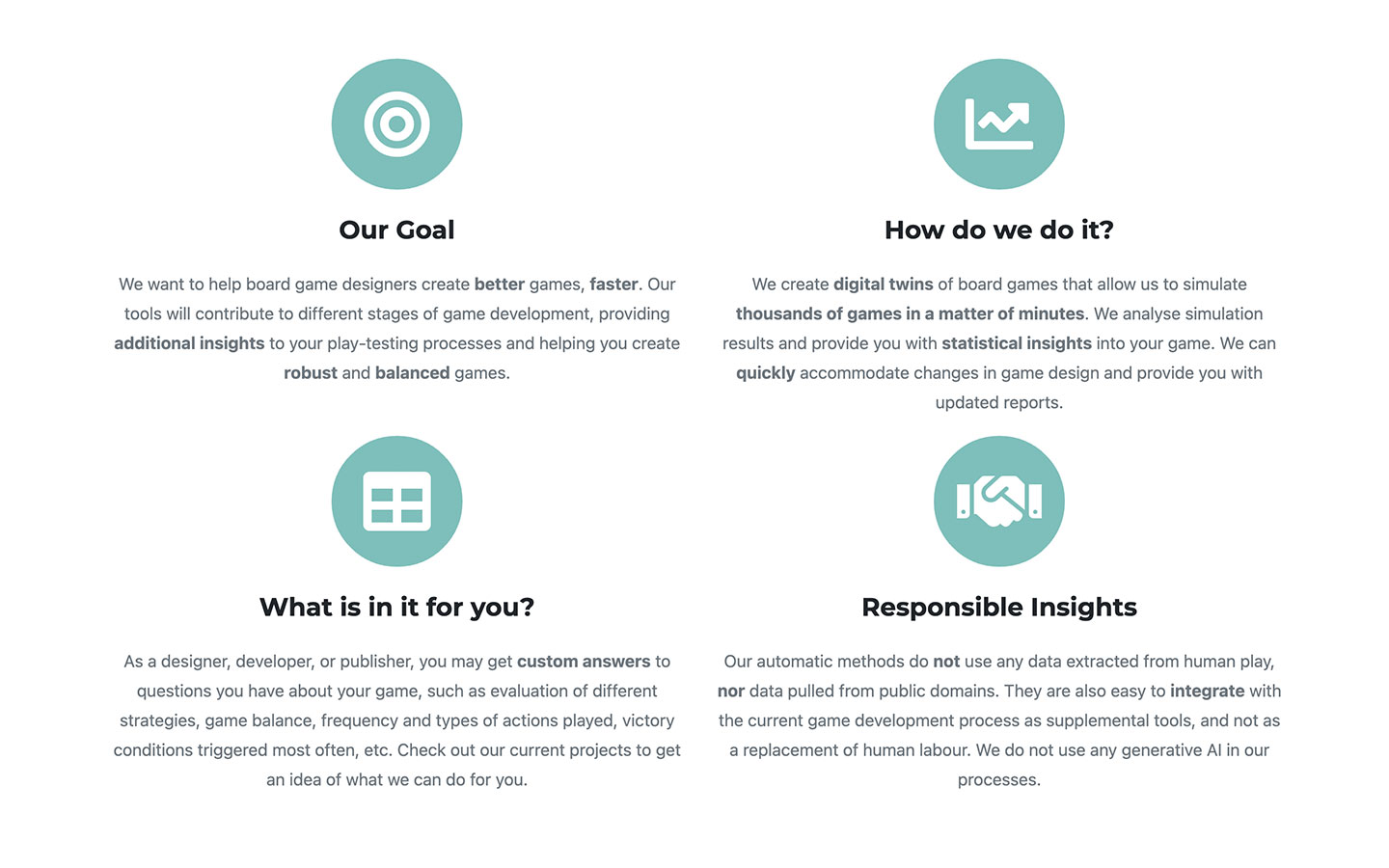
Game designers, developers and publishers often have questions about their games which requires custom answers, such as evaluation of different strategies, game balance, frequency and types of actions played, victory conditions triggered most often, etc.
Solution
Tabletop R&D wants to help board game designers create better games, faster. Their tools contribute to different stages of game development, providing additional insights to play-testing processes and helping designers create robust and balanced games.
Tabletop R&D creates digital twins of board games that allow simulations of thousands of games in a matter of minutes. They analyse simulation results and provide statistical insights to designers about their games.
Sustainable Development Goals addressed


UKRN Services CIC
A combination of inconsistent research practices, training gaps, low confidence and rising external scrutiny threatens UK institutional standards, research funding and reputation.

The 1928 Institute
The University of Oxford
The 1928 Institute targets a lack of representation, systemic data gaps, and under-addressed discrimination facing the British Indian community.
The 1752 Group
University of York
Sexual misconduct by staff is under-reported and under-researched. Higher education institutions in the UK need to be leading the change to prevent cultures of abuse, respond effectively and without inflicting further harm, ensure robust, student-centred reporting and investigation procedures, and implement policies and procedures to eliminate the sexual misconduct of academic, professional services, contracted and temporary staff.

Tabletop Travels
The University of Bristol
As people age, they are more likely to live alone, experience declining health, and feel anxious about leaving home, leading to isolation and loneliness. These barriers prevent many from accessing arts and cultural experiences known to promote wellbeing, confidence, and social connection.